There have been a few developments of the past few weeks here in Oman. I wonder what other expats think of them, and what it says about the direction of this country...
1. Students are no longer allowed to wear jeans for fear of "errosion of national identity".
2. All Ministry of Education foreign teachers will be terminated after 6 years.
3. Fitness centers (like my Horizon Gym) no longer allow men and women to work-out at the same time...
4. You can no longer eat rice outdoors if there is smoking of any kind in the vicinity. (note that Omanis always eat rice...so this actually presents a big dilemma for would be al fresco diners in this country...)
What are your thoughts?
Showing posts with label culture. Show all posts
Showing posts with label culture. Show all posts
Sunday, October 10, 2010


Thursday, August 26, 2010
Hating Expats?
Yesterday, "anonymous" posted a comment that I found really interesting. It's a follow up to the comment about the joke among expats:
Q: What's the difference between and expat and a racist?
A: About three weeks...
To turn it around, "anonymous" (same one or different?) wrote this:
"Injustice,stigma and discrimination against expats, which is institutionalised in Oman. Hence, an average expat is "perceived" racist by Omanis in the spirit of blaming expats for every ill of Omani society."
I'm not sure I completely agree with that, but it's a very interesting topic, that definitely has some truth to it. Do Omanis hate expats? I think there are two totally different sides to this. There are some Omanis who do indeed blame expats for causing many problems in Omani society. There are also the Omanis who idolize expats (the western ones) and seek them out intentionally. Then of course there is everyone inbetween, as there always is.
But let's take a look at the 2 extremes:
Expat Haters--There are Omanis who look upon expats (western and eastern) as the source of depravity in Omani society and distortion of Omani culture. I've been there. I've been told to my face that I am making Omani women impure and am leading them to be perverted like women in my culture. The entire population of Oman (you find figures anywhere from 2.5 to 4 million) is only about 70% Omani (again, very difficult to find consistent census data). That means there is, in fact, a decently large foreign influence of the people in Oman (particularly in Muscat), although this does not even compare to the UAE, where the Emirati population is closer to 10% of the total.
Nevertheless, the distain for westerners as poluters of the true Omani culture and heritage is not as prevelant as it could be. I think most Omanis, even those who would prefer a pure Omani nation, can accept that Oman just would not be where it is today in terms of development and progress if it were not for the influx of western companies and investments, which of course bring people along with them. There are those Omanis who would rather be undeveloped than have western influence, but I think there are very few who actively blame westerns for the ills of Omani society and who would bring that sentiment to the table when forced to deal with them.
Expat Lovers--Now this is even more interesting, in my opinion. I would say the the majority of this brand of Omanis lives primarily in Muscat and are generally well-educated and wealthy. Many Omanis (although, again, not as much as in other Gulf nations)enjoy the "bling" that comes along with western-style development. Cell phones are everyone. Many men own more than one for their differnt category of contacts. One for the family, one for the shabaab, one for work, and maybe one for the girlfriend. Gucci, D&G, and Armani all make abayas, or at least you can find knock-off labels to sew onto them. It's hip, even de rigeur in some circles, to be western in certain elements of style.

Now most Omanis, men and women, who sport this western bling do not necessarily associate it with being western as such. It's just the popular style. The thought process often doesn't go much farther than that. The hypocrisy of buying an Armani-designed garment which generated from one of the most conservative streams of Saudi Islam...doesn't cross their minds.
Nevertheless, there are Omanis, mostly men because they have the most freedom to circulate in a variety of social groups, who actively seek out friendships, and of course business partnerships, with westerns. They pride themselves on being remarkably open-minded and accepting of other cultural mores and customs. And a lot of the time, they are. You can see them sitting in cafes, with western men, or even with each other, most talking in English...just to show they can roll.
In any case, they definitely don't hate westerns. (They still might not want their wives and daughters hanging around men though...)
Enough for now. Let me know what you think. What has been your experience, for my expat readers? And for my Omani readers...what do you think about all this?
Q: What's the difference between and expat and a racist?
A: About three weeks...
To turn it around, "anonymous" (same one or different?) wrote this:
"Injustice,stigma and discrimination against expats, which is institutionalised in Oman. Hence, an average expat is "perceived" racist by Omanis in the spirit of blaming expats for every ill of Omani society."
I'm not sure I completely agree with that, but it's a very interesting topic, that definitely has some truth to it. Do Omanis hate expats? I think there are two totally different sides to this. There are some Omanis who do indeed blame expats for causing many problems in Omani society. There are also the Omanis who idolize expats (the western ones) and seek them out intentionally. Then of course there is everyone inbetween, as there always is.
But let's take a look at the 2 extremes:
Expat Haters--There are Omanis who look upon expats (western and eastern) as the source of depravity in Omani society and distortion of Omani culture. I've been there. I've been told to my face that I am making Omani women impure and am leading them to be perverted like women in my culture. The entire population of Oman (you find figures anywhere from 2.5 to 4 million) is only about 70% Omani (again, very difficult to find consistent census data). That means there is, in fact, a decently large foreign influence of the people in Oman (particularly in Muscat), although this does not even compare to the UAE, where the Emirati population is closer to 10% of the total.
Nevertheless, the distain for westerners as poluters of the true Omani culture and heritage is not as prevelant as it could be. I think most Omanis, even those who would prefer a pure Omani nation, can accept that Oman just would not be where it is today in terms of development and progress if it were not for the influx of western companies and investments, which of course bring people along with them. There are those Omanis who would rather be undeveloped than have western influence, but I think there are very few who actively blame westerns for the ills of Omani society and who would bring that sentiment to the table when forced to deal with them.
Expat Lovers--Now this is even more interesting, in my opinion. I would say the the majority of this brand of Omanis lives primarily in Muscat and are generally well-educated and wealthy. Many Omanis (although, again, not as much as in other Gulf nations)enjoy the "bling" that comes along with western-style development. Cell phones are everyone. Many men own more than one for their differnt category of contacts. One for the family, one for the shabaab, one for work, and maybe one for the girlfriend. Gucci, D&G, and Armani all make abayas, or at least you can find knock-off labels to sew onto them. It's hip, even de rigeur in some circles, to be western in certain elements of style.
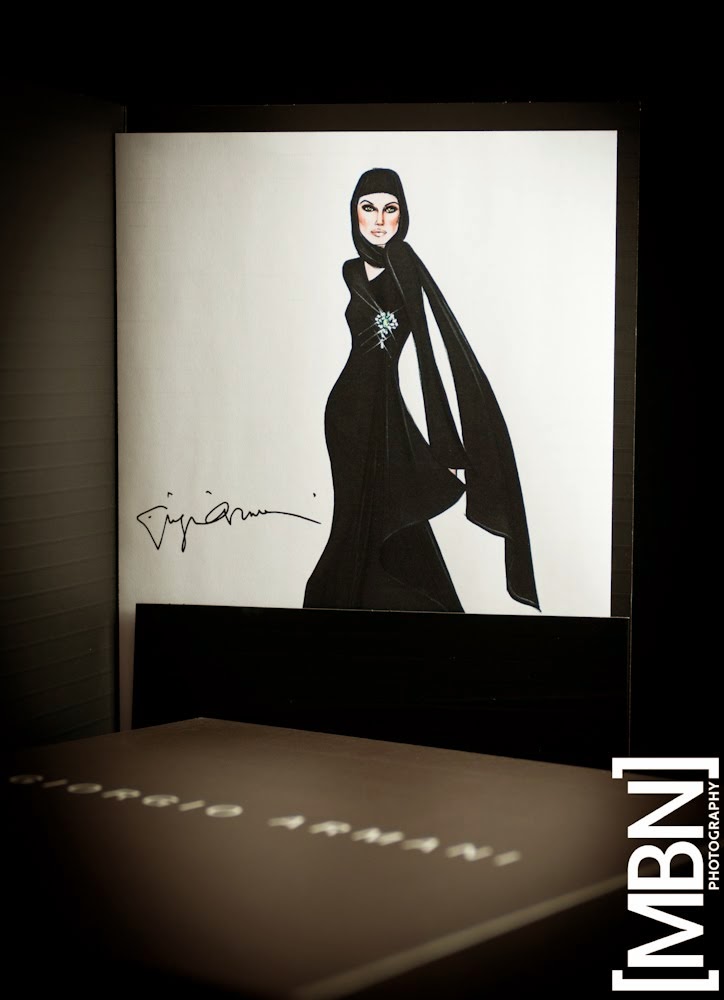
Now most Omanis, men and women, who sport this western bling do not necessarily associate it with being western as such. It's just the popular style. The thought process often doesn't go much farther than that. The hypocrisy of buying an Armani-designed garment which generated from one of the most conservative streams of Saudi Islam...doesn't cross their minds.
Nevertheless, there are Omanis, mostly men because they have the most freedom to circulate in a variety of social groups, who actively seek out friendships, and of course business partnerships, with westerns. They pride themselves on being remarkably open-minded and accepting of other cultural mores and customs. And a lot of the time, they are. You can see them sitting in cafes, with western men, or even with each other, most talking in English...just to show they can roll.
In any case, they definitely don't hate westerns. (They still might not want their wives and daughters hanging around men though...)
Enough for now. Let me know what you think. What has been your experience, for my expat readers? And for my Omani readers...what do you think about all this?
Tuesday, August 24, 2010
Cheerful Indians
Have you ever wondered what makes so many of the Indian (and I really mean Indian in particular, even moreso then Pakistani, Nepalese, Bangladeshi..) laborers here so smiley? I've noticed it before, but it isn't until the last few days that it's really struck me. The Indian workers here at my new job (whether highly-educated professionals, chauffeurs, or toilet cleaners) are all invariably cheerful.
Why is that? Some of them get paid a generous salary that could easily support a family here in Muscat (the professionals) but the vast majority of them get paid pitance. Granted, it's more than they would likely get in their own country doing the same or even higher level work. But...they certainly aren't living in luxury.
I've spoken in particular to three Indians here at my work about their family situaion as well. One was a professional, one a transport driver, one a cleaner. All three of them have their spouse and children living back in India. They haven't seen them for months and maybe only see them twice a year if lucky. And yet, they are happy, and polite, and have genuine smiles spread across their faces.
I just spend the summer away from my fiance and that was hard enough....it is hard to imagine doing that with children added to the equation. Am I just spoiled? Having what I want when I want it? Do I have a higher standard of what is acceptable, in life-style and relationships? I don't know. But I also don't know how they do it.
I would be fascinated to read research about specific cultural influence on mood and life satisfaction levels. If I were in their place (and I think this goes for a lot of people), I would be miserable.
How do they stay happy?
Why is that? Some of them get paid a generous salary that could easily support a family here in Muscat (the professionals) but the vast majority of them get paid pitance. Granted, it's more than they would likely get in their own country doing the same or even higher level work. But...they certainly aren't living in luxury.
I've spoken in particular to three Indians here at my work about their family situaion as well. One was a professional, one a transport driver, one a cleaner. All three of them have their spouse and children living back in India. They haven't seen them for months and maybe only see them twice a year if lucky. And yet, they are happy, and polite, and have genuine smiles spread across their faces.
I just spend the summer away from my fiance and that was hard enough....it is hard to imagine doing that with children added to the equation. Am I just spoiled? Having what I want when I want it? Do I have a higher standard of what is acceptable, in life-style and relationships? I don't know. But I also don't know how they do it.
I would be fascinated to read research about specific cultural influence on mood and life satisfaction levels. If I were in their place (and I think this goes for a lot of people), I would be miserable.
How do they stay happy?
Friday, April 2, 2010
Wearing the Headscarf?
Because of the dialect of Arabic that I speak and because what I look like, most people from here assume that I'm Arab. When they guess, first it's Lebanese, then Syrian, then Tunisian, then Egyptian. After that they push for Turkish or Iranian, but rarely ever get out of the region, let alone all the way across the Atlanic to America.
I'm not blonde and blue-eyed. I don't stand out as much as a lot of Westerners, but I still get plenty of stares. A lot of them are inquisitive stares. I can see the questions spinning in their heads: "Is she from here? No, can't be. But...where? Not western....does she speak Arabic?" Sometimes I don't have to see the questions, but I hear them talking about me in Arabic. It always makes my day when I am standing next to people who are talking about me in Arabic, asking each other if they think I understand Arabic or not. I just pretend they are lucky and I don't understand what they are saying.
I used to be totally opposed to bending to the culture and covering my hair. I saw it as a sign of the voluntary subjugation of women. I didn't want to send the message that I think women are pearls that should be protected by their oyster shell (a common metaphor here) or that I think men can't control their sexual urges, which will be inevitably inflamed by my irresistible hair.
But I've gotten to a point in my expat life where I don't think like that anymore. It's a custom. Women cover their hair here. Is it really necessary to delve so much deeper into the meaning and the consequences? Women still have rights, they still make decisions, they are still beautiful. Does it really matter that much?
Today I decided to "respect the culture" and cover my hair. Fine, I admit, it was more just curiosity about how I would be treated differently. I am writing this now from a cafe in Barka, a town in between the conservative backwaters of my hometown, and the much more open capital, Muscat.
I have to say that I like it. Men are keeping their distance more, I have been attracting fewer stares (although I feel terribly conspicuous--like everyone knows what I'm doing), but the most noticeable difference for me is they way I am treated by other women. I am just one of the women now. Even though I am wearing jeans and a long sleeved tee shirt with the headscarf, it makes all the difference. In the bathroom, we all fix our headscarves together. Say "Salam 3leykum. Kifish?". And go on our way.
I'm not Muslim, and don't plan on converting, but is bending your ways to fit in better and make people that little bit more comfortable around you really so bad? I won't wear it at the college where I teach, because there part of my role is to represent Western culture, but outside, why not?
Something to think about, as I sit here sipping my cappuccino and watching people watch me (or not) out of the corner of my eye.....
I'm not blonde and blue-eyed. I don't stand out as much as a lot of Westerners, but I still get plenty of stares. A lot of them are inquisitive stares. I can see the questions spinning in their heads: "Is she from here? No, can't be. But...where? Not western....does she speak Arabic?" Sometimes I don't have to see the questions, but I hear them talking about me in Arabic. It always makes my day when I am standing next to people who are talking about me in Arabic, asking each other if they think I understand Arabic or not. I just pretend they are lucky and I don't understand what they are saying.
I used to be totally opposed to bending to the culture and covering my hair. I saw it as a sign of the voluntary subjugation of women. I didn't want to send the message that I think women are pearls that should be protected by their oyster shell (a common metaphor here) or that I think men can't control their sexual urges, which will be inevitably inflamed by my irresistible hair.
But I've gotten to a point in my expat life where I don't think like that anymore. It's a custom. Women cover their hair here. Is it really necessary to delve so much deeper into the meaning and the consequences? Women still have rights, they still make decisions, they are still beautiful. Does it really matter that much?
Today I decided to "respect the culture" and cover my hair. Fine, I admit, it was more just curiosity about how I would be treated differently. I am writing this now from a cafe in Barka, a town in between the conservative backwaters of my hometown, and the much more open capital, Muscat.
I have to say that I like it. Men are keeping their distance more, I have been attracting fewer stares (although I feel terribly conspicuous--like everyone knows what I'm doing), but the most noticeable difference for me is they way I am treated by other women. I am just one of the women now. Even though I am wearing jeans and a long sleeved tee shirt with the headscarf, it makes all the difference. In the bathroom, we all fix our headscarves together. Say "Salam 3leykum. Kifish?". And go on our way.
I'm not Muslim, and don't plan on converting, but is bending your ways to fit in better and make people that little bit more comfortable around you really so bad? I won't wear it at the college where I teach, because there part of my role is to represent Western culture, but outside, why not?
Something to think about, as I sit here sipping my cappuccino and watching people watch me (or not) out of the corner of my eye.....
Subscribe to:
Posts (Atom)